
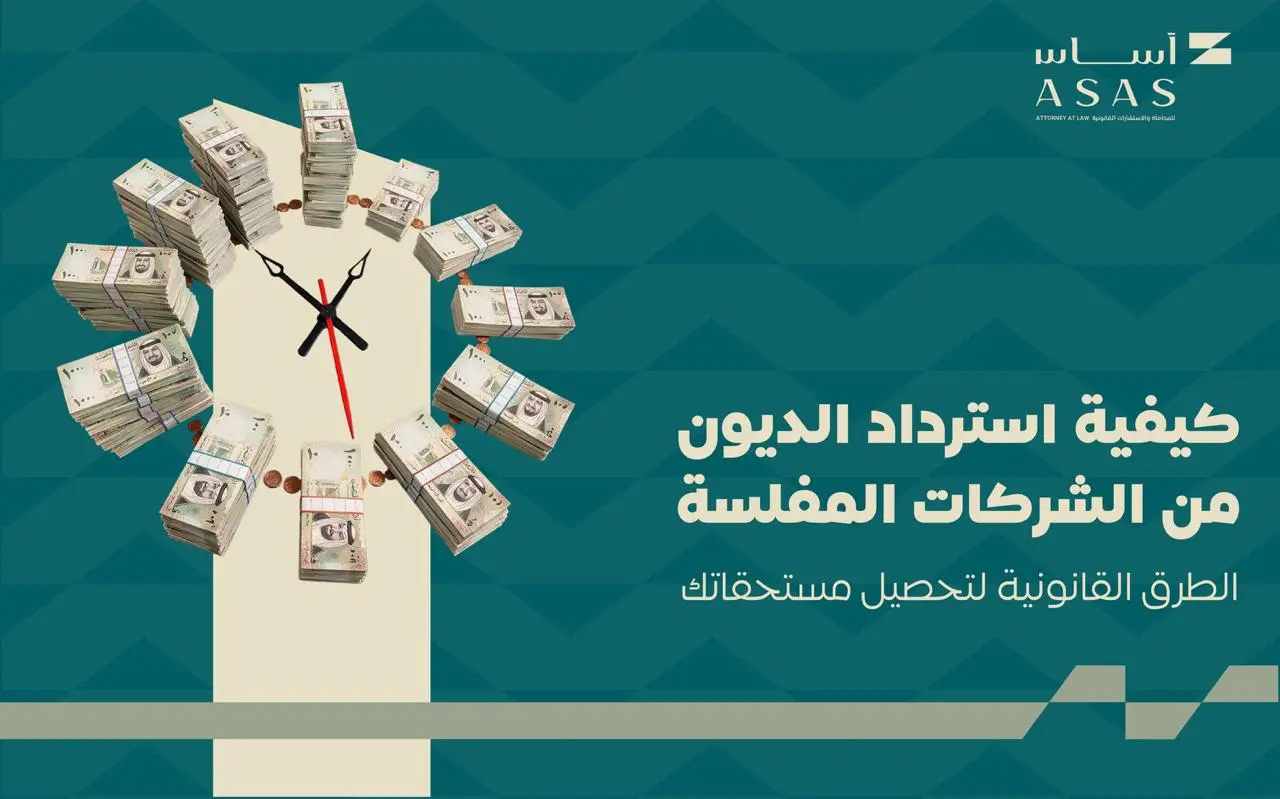
Recovering debts from bankrupt companies is one of the most complex legal issues, because collecting what is owed is subject to legal procedures designed to protect the rights of all creditors and treat them fairly. A company’s bankruptcy does not necessarily mean that creditors lose their rights: the law provides legal means to claim and prove debts and to take part in the bankruptcy proceedings according to the priorities set by law. This requires meeting the statutory deadlines and procedures, submitting documents that prove the debt, and following the bankruptcy proceedings through to the distribution of assets, if any.
At this stage, a creditor needs to understand which statutory procedure the company is subject to, because the way a debt is handled differs depending on whether the company is going through financial reorganization, liquidation or another bankruptcy procedure. Legal expertise in bankruptcy and company liquidation therefore helps you understand your legal position as a creditor and decide on the right steps to claim what you are owed.
Article Contents
ToggleWhat Is a Bankrupt Company Under Saudi Law?
A bankrupt company is one facing financial difficulties that leave it unable to pay its debts or meet its financial obligations when they fall due, which requires it to go through the procedures of the bankruptcy law in force in Saudi Arabia. Entering bankruptcy proceedings does not mean the company ceases to exist or is liquidated immediately: the law aims to put its finances in order through procedures that may include financial reorganization, liquidation or other statutory procedures depending on its situation. The law also seeks to balance giving the company a chance to address its financial position with protecting creditors’ rights, by regulating how debts are claimed and how assets are distributed according to the priorities and procedures it sets.
When Is a Company Legally Considered Bankrupt?
A company may be considered legally bankrupt when it is in financial difficulty to the extent that it cannot pay its debts or meet its obligations when they fall due, or when its debts and obligations exceed the total value of its assets and property, and it becomes subject to one of the bankruptcy procedures set out in the Saudi Bankruptcy Law. Financial losses or a drop in profits alone are not enough for a company to be considered bankrupt; the difficulty must reach a stage that affects its ability to meet its financial obligations.
Whether a company is bankrupt is determined through statutory procedures and by the competent judicial authorities, which examine the company’s financial position and decide on the appropriate procedure — whether financial reorganization, liquidation, protective settlement or any other procedure provided for by law — in a way that preserves creditors’ rights and treats all parties fairly.
Does a Bankruptcy Declaration Cancel Debts?
No. Under Saudi law, a bankruptcy declaration does not automatically cancel debts; instead, their collection becomes subject to the procedures set out in the Bankruptcy Law. Creditors remain entitled to claim what they are owed by submitting their claims and proving their debts within the statutory deadlines and procedures, so that the claims are considered according to the established order of payment. A creditor may receive all or part of the debt depending on the value of the company’s available assets and the type of procedure followed, such as financial reorganization or liquidation. A bankruptcy declaration therefore does not cancel creditors’ rights; it regulates how they are satisfied, ensuring fairness and equality among all claimants.
Can Debts Be Recovered from Bankrupt Companies?
Yes, debts can be recovered from bankrupt companies, but only through the procedures set out in the Saudi Bankruptcy Law, not through direct claims outside those procedures. The creditor must prove the debt and submit the claim within the statutory deadlines so it is included in the list of debts.
Amounts owed are then paid according to the order of priority set by law and depending on the value of the company’s available assets. A creditor may recover all or part of the debt, depending on the outcome of the financial reorganization or liquidation. Taking the right legal steps quickly therefore improves the chances of preserving your rights and collecting what you are owed.
How Can Debts Be Recovered from Bankrupt Companies in Saudi Arabia?
The Saudi Bankruptcy Law provides several legal routes for recovering debts from bankrupt companies, protecting creditors’ rights and treating them fairly. These procedures start with proving the debt and submitting the claim within the statutory deadlines, followed by monitoring the bankruptcy proceedings and taking part in the distribution of assets or the implementation of the financial reorganization plan, depending on the procedure followed. A creditor is also entitled to object to certain decisions or to seek protection of its rights where there are legal grounds to do so.
Successful recovery depends on acting quickly, completing the supporting documents and complying with the requirements of the Saudi Bankruptcy Law throughout the proceedings.
The Procedure for Claiming Debts in Saudi Arabia
Recovering debts from companies in bankruptcy proceedings requires following legal steps that preserve creditors’ rights and include their claims in the official proceedings. Following these steps increases the chances of the claim being accepted and of taking part in the distribution of assets or the implementation of the financial reorganization plan, as provided for in the Saudi Bankruptcy Law. A creditor should therefore take the statutory steps as soon as it becomes aware that bankruptcy proceedings have started.
Preparing Documents and Evidence
The claim begins with gathering all the documents that prove the debt exists, such as contracts, invoices, purchase orders, receipts, correspondence and any other documents confirming the amount claimed and its due date.
Submitting the Claim to the Bankruptcy Trustee
The claim must be submitted to the bankruptcy trustee or the competent authority within the statutory period, with all supporting documents attached so they can be examined and verified.
Registering the Claim on the List of Creditors
After the claim is reviewed, accepted claims are included in the list of creditors, giving the claimant the right to take part in the bankruptcy proceedings and to be paid according to the priority set by law.
Following the Statutory Procedures
The creditor’s role does not end with submitting the claim. The creditor must follow every stage of the bankruptcy proceedings, meet the set deadlines, attend meetings or object to decisions where appropriate, to protect its rights and improve its chances of collecting what it is owed.
Submitting a claim is not the end of the creditor’s role. The proceedings may require you to follow decisions, deadlines, objections and documents through the various stages of bankruptcy. An early legal review therefore helps you avoid mistakes that could affect your chances of collecting what you are owed.
If you are a creditor of a company in bankruptcy proceedings, the ASAS Law Firm team can help you study and prepare your claim and follow the related procedures.
The Role of the Bankruptcy Trustee in Debt Recovery
The bankruptcy trustee plays a central role in managing bankruptcy proceedings and protecting the rights of all parties. The trustee identifies the company’s assets and liabilities, receives creditors’ claims and verifies them, and then prepares a list of accepted debts in accordance with the Saudi Bankruptcy Law. The trustee also oversees the management and preservation of the company’s assets and follows the implementation of the financial reorganization or liquidation, as the case may be, distributing the proceeds to creditors according to the statutory priorities. Cooperating with the trustee and submitting the required documents within the set deadlines are important factors that help a creditor prove its right and improve its chances of recovering what it is owed under the applicable legal procedures.
How Are Debts Prioritized in Corporate Bankruptcy?
Not all of a bankrupt company’s debts are paid in the same order. The Saudi Bankruptcy Law sets certain priorities to ensure the company’s assets are distributed fairly and in an orderly way among creditors. The order of payment depends on the nature of the debt and the security attached to it: some debts take priority over others, while the rest are paid after the priority claims have been satisfied. Understanding this order helps creditors gauge their chances of recovery and the right way to make their claims.
1. Privileged and Secured Debts
Debts secured by security in rem, such as a mortgage or pledge, have priority in being paid from the funds or assets subject to the security, in accordance with the legal provisions governing the rights of secured creditors. Privileged debts, which include taxes and employees’ wages, may sometimes rank ahead of secured debts.
The legal assessment of a claim becomes even more important when the debt is linked to financing, a tax obligation or a disputed financial claim, as these cases may require studying the nature of the debt and the related security and documents before deciding on the right legal course. For claims of this kind, you can use our Finance & Tax Disputes services.
2. Preferential Debts (Bankruptcy Costs, Employees’ Wages, Taxes)
Some debts enjoy special priority, such as the costs and expenses of the bankruptcy proceedings, the wages and entitlements of employees as set by law, and certain statutory obligations such as government dues that the law gives priority in payment.
3. Ordinary and Unsecured Debts
These include debts that are not linked to specific security and have no statutory priority, such as many trade debts and ordinary financial claims. They are paid after the priority debts have been satisfied, depending on the funds remaining from the company’s assets and the distribution ratio set in the bankruptcy proceedings.
What Are the Real Chances of Recovering Debts from Bankrupt Companies?
The chances of recovering debts from bankrupt companies depend on a number of legal and financial factors, and full recovery cannot be guaranteed in every case. The more sufficient the company’s assets and the more fully the claim complies with the statutory procedures, the higher the likelihood of recovering part or all of the debt. The nature of any security, the type of bankruptcy procedure, the number of creditors and the order of priority of the claims all affect how much each creditor may receive. Acting quickly and proving the debt in accordance with the Saudi Bankruptcy Law are therefore among the most important factors that improve the chances of recovery.
Note that liquidating a company and closing its business is different from simply cancelling its commercial registration; each procedure has different requirements and legal consequences. To learn about the procedures for cancelling a commercial registration after a business closes, see our guide to commercial registration cancellation procedures in Saudi Arabia.
The Effect of the Company’s Assets and of Security or Mortgages
The more assets a bankrupt company has that can be turned into cash, the better the chances of its debts being paid. Creditors holding mortgages or security in rem also have a better chance of being paid from the funds or assets subject to the security, in accordance with the law.
The Type of Bankruptcy Procedure (Liquidation or Reorganization)
The chances of recovering debts differ depending on the procedure followed. In financial reorganization, the company may continue operating under a plan to repay its debts, whereas in liquidation the company’s assets are sold and the proceeds distributed to creditors according to the order of priority set by law.
The Number of Creditors
The number of creditors and the size of the claims affect the proportion that can be recovered, since the available funds are distributed among claimants according to statutory priority. The more creditors there are, or the larger the debts compared with the company’s assets, the less likely each creditor is to receive the full amount owed.
Are There Mistakes That Prevent Recovery of Debts from Bankrupt Companies?
Recovering debts from bankrupt companies requires complying with the procedures set out in the Saudi Bankruptcy Law, and certain mistakes can lead to a claim being rejected or reduce the chances of collecting what is owed. It is not enough for the debt to be due; it must be proven and the legal steps followed within the set deadlines. Failing to follow the bankruptcy proceedings or to complete the required documents can also weaken the creditor’s legal position. Knowing and avoiding common mistakes is therefore one of the most important ways to protect your rights and improve your chances of recovery.
1. Filing the Claim Late
Filing a claim late is one of the most damaging mistakes, as it may lead to the loss of some rights or make it difficult to include the debt in the bankruptcy proceedings if the statutory deadlines for submitting claims are not met.
2. Weak Legal Documentation
Failing to provide contracts, invoices or documents that clearly prove the debt may lead to the claim being rejected or challenged, so all evidence of the amount and legal basis of the debt should be provided.
The problem may not end once the claim is submitted: a dispute may arise over the existence of the debt, its amount, the supporting documents or the creditor’s entitlement to be paid. In such cases, the creditor may need to take legal action to protect its position and pursue its right, whether through settlement or the appropriate judicial means within litigation and alternative dispute resolution.
3. Not Following the Bankruptcy Proceedings
Some creditors believe their role ends once the claim is submitted, but failing to follow the bankruptcy proceedings and the decisions issued during them may mean missing the chance to object or to complete the statutory requirements that protect their rights.
4. Not Registering the Debt Formally
Failing to register the claim in accordance with the statutory procedures, or overlooking its inclusion in the list of creditors, may prevent the creditor from sharing in the distribution of the company’s assets or benefiting from any amounts paid during the bankruptcy proceedings. Formal registration is therefore an essential step to preserve the right to claim the debt.
The Role of the Saudi Bankruptcy Law in Protecting Creditors’ Rights
The Saudi Bankruptcy Law plays a key role in protecting creditors’ rights by regulating how struggling or bankrupt companies are dealt with, in a way that is fair and transparent for all parties. The law sets a clear mechanism for submitting claims and proving debts, with statutory deadlines and procedures that must be followed for a claim to be accepted. It also regulates the order in which debts are paid, preserving the rights of secured and unsecured creditors in accordance with the law and preventing one creditor from being favored over another without legal basis.
The bankruptcy trustee and the competent judicial authorities oversee the management of the company’s assets and monitor the financial reorganization or liquidation, ensuring proceeds are distributed fairly. The law also provides ways to object to decisions that may affect creditors’ rights and promotes transparency at every stage of the bankruptcy proceedings. This helps balance giving the company a chance to address its financial position with protecting creditors’ interests and improving their chances of recovering what they are owed under Saudi law.
How Long Does It Take to Recover Debts from a Bankrupt Company?
There is no fixed period for recovering debts from a bankrupt company. The time varies depending on the type of bankruptcy procedure, the size of the company’s assets, the number of creditors and how complex the claims and related disputes are. Proceedings may take a few months in simple cases, but may extend over years when there are many assets, legal disputes or a complex financial reorganization. How quickly the claim is filed, how complete the documents are and whether the statutory deadlines are met also affect the progress of the proceedings. Creditors are therefore advised to take legal action as soon as bankruptcy proceedings start, to preserve their rights and improve their chances of recovering what they are owed as soon as possible.
Why Early Legal Action Matters When Recovering Debts from Bankrupt Companies
Early legal action is one of the most important factors in improving the chances of recovering debts from bankrupt companies, because it helps the creditor preserve its rights from the start of the bankruptcy proceedings and meet the statutory deadlines for submitting claims. Delay can make it harder to prove the debt or lead to the loss of certain procedural rights guaranteed by the Saudi Bankruptcy Law. Acting early also gives you time to prepare the necessary documents, communicate with the bankruptcy trustee, register the claim on the list of creditors and follow every stage of the proceedings as it happens.
It also allows you to object to decisions that may affect your rights as a creditor where there are legal grounds, and to take part in the distribution of assets or the implementation of the financial reorganization plan. Taking legal steps as soon as bankruptcy proceedings start therefore improves the chances of collecting what you are owed, reduces legal risk and protects your rights as a creditor under the rules governing bankruptcy in Saudi Arabia.
When Do You Need Specialized Legal Action to Recover Debts?
The need for specialized legal action increases when the debtor company enters bankruptcy proceedings, refuses to pay what it owes, or when disputes arise over the validity of the debt, its amount or its priority. Legal intervention is also necessary if the claim has to be submitted within bankruptcy proceedings, if decisions affecting the creditor’s rights need to be challenged, or if the financial reorganization or liquidation must be followed to ensure the right is not lost through delay or failure to meet the statutory requirements. Specialized legal representation helps prepare the claim file correctly, assemble the supporting documents, and follow all procedures and statutory deadlines.
In this context, ASAS Law Firm provides integrated legal services that include studying the status of the debt, assessing the chances of recovering it, preparing and submitting claims, representing clients before the competent authorities, and following the bankruptcy proceedings through to completion.
The legal team works to protect creditors’ interests, reduce legal risks and improve the chances of collecting what is owed under the Saudi Bankruptcy Law and the applicable statutory procedures.
If you are owed money by a struggling company or a company in bankruptcy proceedings, don’t wait until the proceedings are over. Contact ASAS Law Firm to review your claim and identify the right legal steps to protect your rights.
. How can debts be recovered from bankrupt companies?
Debt recovery involves submitting a claim within the bankruptcy proceedings, proving the debt with documents, and following the financial reorganization or liquidation of the bankrupt company under the Saudi Bankruptcy Law.
. Can debts be recovered after a company goes bankrupt?
Yes. Debts can be recovered if they are proven and the claim is submitted in accordance with the statutory procedures. How much is recovered depends on the company’s assets and the order of priority of the debts.
. What are creditors’ rights under the Saudi Bankruptcy Law?
Creditors are entitled to prove their debts, register their claims, be informed about the proceedings, object to certain decisions as provided by law, and be paid according to the order of priority.
. What is the order of priority of creditors?
Debts are paid according to the priority set by the Bankruptcy Law, starting with the bankruptcy trustee’s fees and the administrative and legal expenses, followed by secured debts, employees’ dues, privileged debts, ordinary (unsecured) debts and, finally, the rights of partners and shareholders.
. What percentage of debt is usually recovered?
There is no fixed percentage; it varies with the value of the company’s assets, the size of the debts, the number of creditors and the type of bankruptcy procedure followed.
. What is the difference between financial distress and bankruptcy?
Financial distress is a financial difficulty that may be temporary and can be remedied, whereas bankruptcy is a situation regulated by law through legal procedures to restructure or liquidate the debtor’s affairs when it fails to meet its obligations.
. How do I file a claim in a company’s bankruptcy?
A bankruptcy claim is submitted to the bankruptcy trustee or the competent authority within the legal period, with documents proving the debt attached and all requirements completed.
. What documents are needed to recover a debt?
They usually include contracts, invoices, purchase orders, receipts, correspondence and any documents proving the amount of the debt and its due date.
. Can a court judgment be enforced against a bankrupt company?
Once bankruptcy proceedings have been opened in Saudi Arabia, enforcement against the company is subject to the provisions of the Bankruptcy Law, and rights are satisfied through the statutory bankruptcy procedures rather than through ordinary enforcement procedures.
. What happens to debts after a company is liquidated?
Debts are paid from the proceeds of selling the company’s assets according to the order of priority set by law. If the assets are insufficient, creditors may receive part of what they are owed, depending on the funds available.
. What is the difference between secured and unsecured debts in bankruptcy?
Secured debts are backed by security or a mortgage that gives their holders priority in being paid from the secured asset, while unsecured debts are paid after the priority debts have been satisfied, from whatever funds remain from the company’s assets.