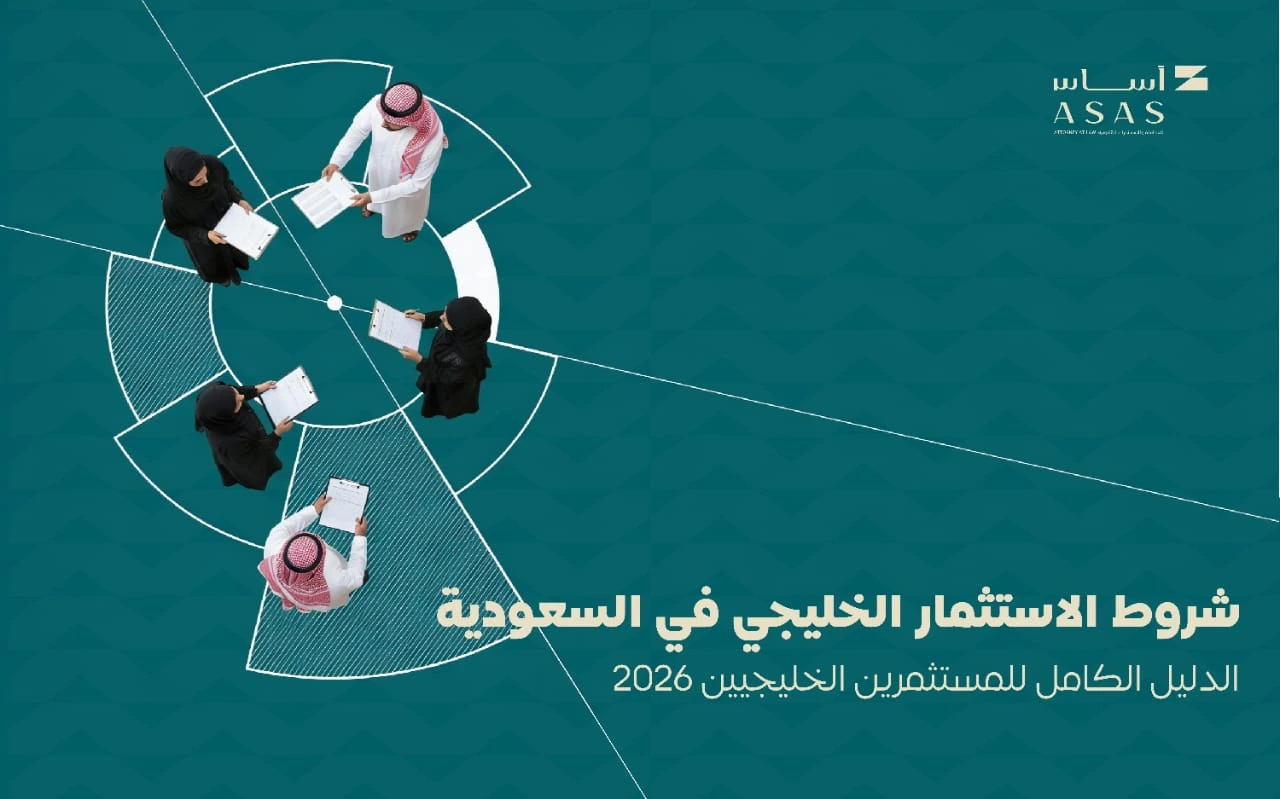
In recent years, many investors have turned to new ventures, and Saudi Arabia has attracted a large share of this investment, especially with the incentives offered under Vision 2030 to develop the investment environment and diversify the economy. The number of commercial registrations held by GCC and foreign investors has grown steadily, reflecting growing confidence in the Saudi market.
Still, key questions remain: What are the requirements for GCC investment in Saudi Arabia? Do the procedures differ between GCC and foreign investors? Which activities are permitted, and what are the licensing and formation requirements in 2026? In this guide, we answer these questions and set out the key steps.
What Is GCC Investment in Saudi Arabia?
GCC investment in Saudi Arabia refers to citizens of Gulf Cooperation Council states carrying on commercial and investment activities in the Kingdom under the laws and economic agreements adopted between the Gulf states. It includes setting up companies, owning business stakes and investing in sectors such as trade, real estate, industry, technology and services. In many activities, GCC investors are treated like Saudi investors, subject to specific rules, which gives them more flexibility than many categories of foreign investors.
Allowing GCC nationals to set up companies in Saudi Arabia is part of the Kingdom’s efforts to strengthen Gulf economic integration. Recent reforms and e-services have simplified company formation and licensing, although GCC investment remains subject to rules on permitted activities, registration and legal compliance.
What Is the Difference Between a GCC Investor and a Foreign Investor?
A GCC investor enjoys greater facilities and, in many activities, is treated like a Saudi investor under the Gulf economic agreements. A foreign investor is subject to the investment rules of the Ministry of Investment (MISA), which define the registration requirements and the sectors open to foreign investment. Learn more in our guide to the foreign investment law in Saudi Arabia.
Foreign investors generally face more requirements in terms of documents, registration and approvals, while GCC investors can usually move to formation more directly. Saudi Arabia continues to simplify procedures for both through its e-services.
Steps to Set Up a Company as a GCC Investor in Saudi Arabia
- Choose the company type and activity: select the legal form that suits the investment, such as a limited liability company or a sole proprietorship, and confirm the activity is open to GCC investors.
- Reserve the trade name: through the Saudi Business Center platform, checking the name is available and meets the requirements.
- Prepare and approve the articles of association: draft the articles online, have them approved by the partners (if any), and complete the remaining steps on the Saudi Business Center platform until the commercial registration is issued.
- Obtain the necessary licenses: some activities need additional licenses or approvals. The business is then registered with the relevant bodies, such as the Zakat, Tax and Customs Authority (ZATCA) and the General Organization for Social Insurance (GOSI), and obtains the municipal license and any sector licenses.
The investor’s responsibility does not end once the commercial registration is issued: under the new Commercial Register Law, the CR data must be confirmed every year. Read our guide to commercial registration renewal and annual confirmation in Saudi Arabia.
The Main Advantages of GCC Investment in Saudi Arabia
Equal Opportunities with Saudi Investors
In many activities, GCC investors receive treatment similar to Saudi investors.
Business Ownership
GCC investors can own their businesses outright without a Saudi partner in most activities, which also makes it easier to transfer profits and capital.
Simple Formation Procedures
Advanced e-services allow GCC investors to issue their commercial registration and complete procedures quickly.
Diverse Investment Opportunities
Opportunities span trade, technology, real estate, industry, tourism and logistics.
A Strong Economy and a Large Market
Saudi Arabia has the largest economy in the region and a broad consumer base.
Government Support and Incentives
Government initiatives encourage GCC investors to expand and launch new projects.
GCC Investment Requirements: The Key Conditions
- GCC nationality: the investor must hold the nationality of a GCC state, present a valid passport or GCC ID card, and be at least 18 years old.
- A permitted activity: the activity must be one GCC investors are allowed to carry on under Saudi law.
- Tax and regulatory compliance: registration with the competent authorities, compliance with tax, zakat and social insurance rules, and any specific licenses required for activities such as health, education or finance.
Which Activities Are Open to GCC Investors?
Commercial Activities
Including general trading and wholesale and retail trade.
Real Estate
Real estate development, management and leasing under the applicable rules; Makkah and Madinah are subject to different rules.
Industrial Activities
Manufacturing, production and industrial services, supported by industrial zones and Vision 2030 initiatives.
Technology and Fintech
Software, e-commerce, digital solutions and modern technologies.
Tourism and Hospitality
Hotels, resorts and tourism services.
Professional and Advisory Services
Legal, consulting, management and marketing services. Investment is also possible in agriculture, health and education, subject to additional requirements.
How Much Does It Cost to Set Up a GCC Company in Saudi Arabia?
Costs vary with the activity, the licensing requirements and the services connected with the company. Because GCC investors are treated like Saudi investors in many procedures, most formation fees are similar for both. Costs generally fall into government fees paid through the Saudi Business Center platform (commercial registration, publication of the articles of association, trade name reservation and any Chamber of Commerce subscription), platform and service costs (national address and government HR platforms such as Qiwa, Muqeem and Mudad), and operating costs (premises and municipal or professional licenses). Fees change from time to time, so check the current amounts on the official platforms. For a detailed breakdown, see our guide to the cost of setting up a company in Saudi Arabia.
The Main Challenges of GCC Investment in Saudi Arabia
Multiple Regulatory Procedures
Understanding all government requirements can be complex when dealing with more than one regulator.
Changing Laws and Regulations
Ongoing regulatory changes require constant monitoring. Compliance also extends to protecting the company’s assets after it starts operating — for example, see our article on trademark counterfeiting penalties in Saudi Arabia.
Different Licensing Requirements by Activity
Some activities need approvals from several authorities, which can lengthen the formation period.
Managing Operating Costs
Rent, salaries and platform costs need careful financial planning.
Competition in the Local Market
Many sectors are highly competitive and require a clear strategy.
Tax and Regulatory Compliance
Investors must understand their tax, zakat and labor obligations.
Does a GCC Investor Need a Saudi Partner?
In most cases, no. GCC investors can own their business in full and set it up in their own name or with other investors without a local partner, and in many activities they can proceed directly to formation. The right legal structure still depends on your activity, and the ASAS team can help you choose it.
How Long Does It Take to Set Up a GCC Company in Saudi Arabia?
Timelines depend on the activity, the completeness of the documents and how quickly approvals are obtained. Straightforward cases completed online can take a few working days, while activities that need additional licenses can take several weeks.
Set Up Your Company with the Support of ASAS Law Firm
GCC investment in Saudi Arabia is a promising opportunity, but its success depends on understanding the legal conditions and procedures before starting. ASAS Law Firm — Attorneys and Legal Consultants provides integrated support for GCC investors, from studying the activity and choosing the legal form, through formation and licensing, to ongoing compliance with Saudi law.
Ready to set up your company in Saudi Arabia? Contact ASAS Law Firm today.
Frequently Asked Questions
Are GCC nationals treated like Saudi nationals when setting up a company?
In many activities, yes. GCC investors receive treatment close to that of Saudi citizens and can open a commercial registration in their own name.
Which activities are restricted for GCC nationals?
Most commercial and industrial sectors are open, but some sectors are subject to different rules, such as security-related and certain religious fields.
Does a GCC investor need a Saudi sponsor to open a company?
No. GCC investors can own and invest directly without a Saudi sponsor.
Is there a minimum capital for a limited liability company?
There is no general minimum capital for an LLC set up by GCC investors; capital is set according to the size and needs of the business.
Can a GCC national own commercial property in their company’s name?
Yes, subject to specific rules and conditions, including that the property is used for the licensed activity. Check the current conditions before purchasing.
What is the difference between GCC investment and 100% foreign investment?
A GCC investor can usually start and obtain a commercial registration without MISA registration, while a foreign investor must register the investment with MISA and meet the requirements for the chosen activity. See our guide to the foreign investment law in Saudi Arabia.